
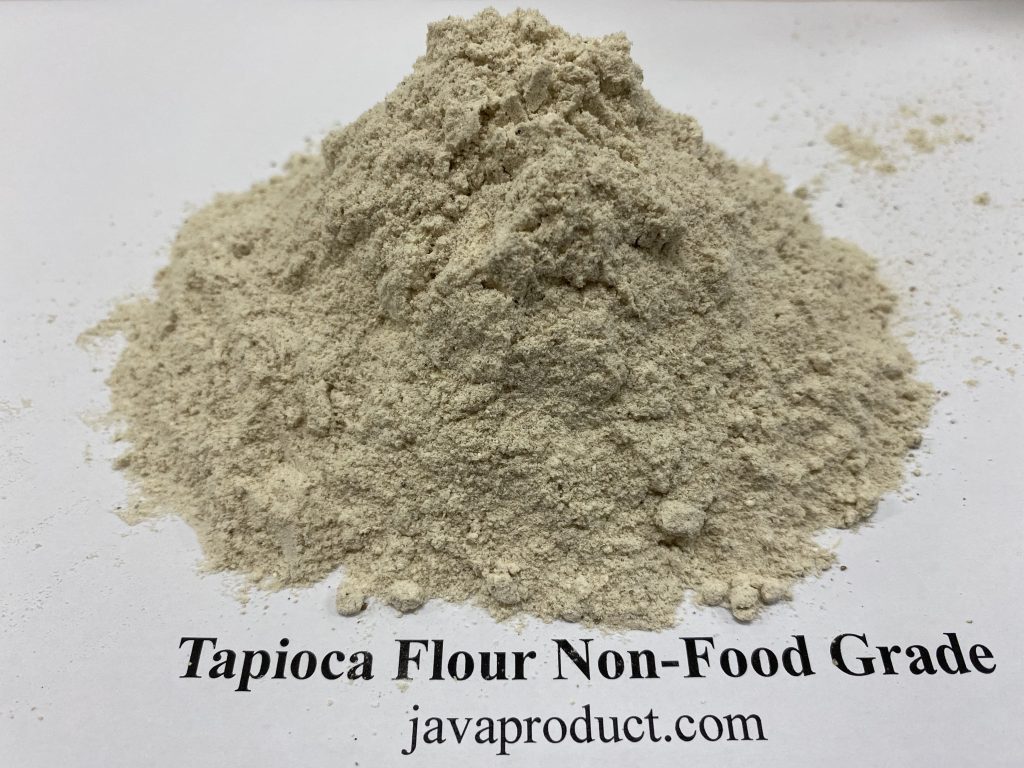
Non-Food Grade Tapioca Flour is tapioca flour that does not meet the quality standards or requirements for use in food products. It is typically used in non-food applications, such as in various industrial processes or technical uses.
Tapioca flour itself is derived from the cassava root and is a source of starch commonly used in food industries. However, non-food grade tapioca flour is generally not subjected to the same rigorous purification and testing processes as food-grade tapioca flour, making it unsuitable for human consumption.
Uses of Non-Food Grade Tapioca Flour:
- Paper and Pulp Industry:
- Used as a binding agent or filler in the production of paper and related products.
- Textile Industry:
- Applied in the dyeing or coating of fabrics.
- Pharmaceutical and Cosmetic Industries:
- Sometimes used as a filler in the production of certain drugs or cosmetics, under specific conditions.
- Binding and Adhesive Production:
- Used in the production of adhesives or binding agents in manufacturing processes.
Difference from Food-Grade Tapioca Flour:
- Food Grade: Meets safety standards for human consumption and is tested to ensure it is free from harmful chemicals.
- Non-Food Grade: Does not meet these standards, so it is not suitable for human consumption.
Non-food grade tapioca flour is typically cheaper because it does not go through the stringent purification process. However, it still holds economic value in various industries.