
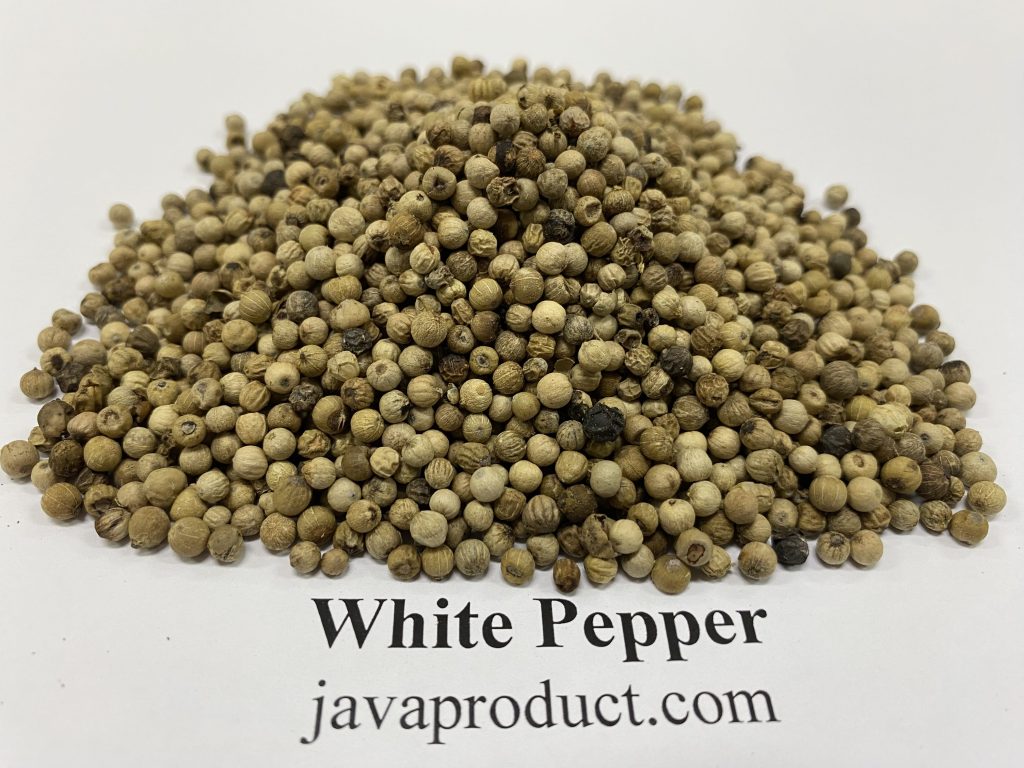
White Pepper (Piper nigrum) is a spice made from the fully ripe fruit of the pepper plant. Unlike black pepper, white pepper is produced by removing the outer skin of the pepper berries after they are soaked, leaving only the inner seed. It has a milder, cleaner flavor and a subtler aroma compared to black pepper.
Characteristics of White Pepper:
- Color: Pale grayish-white after drying.
- Size: Small, round, and similar in size to black pepper but lighter in color.
- Flavor and Aroma: Mildly spicy with a clean and less pungent aroma.
Production Process:
- Ripe pepper berries are harvested.
- The berries are soaked in water for several days to soften the outer skin.
- The softened skin is removed, leaving the seed.
- The seeds are dried to produce white pepper.
Uses of White Pepper:
- Culinary:
- Used in soups, sauces, and light-colored dishes where black pepper’s dark specks are undesirable.
- Common in Asian cuisines, particularly in clear soups, stir-fries, and creamy sauces.
- Traditional Medicine:
- Helps alleviate digestive issues.
- Used in herbal remedies for mild pain relief and cough suppression.
- Food Industry:
- Added to instant food products like soups and noodles.
Benefits of White Pepper:
- Aids Digestion: Stimulates the production of digestive enzymes, improving metabolism.
- Antioxidant Properties: Contains compounds that combat free radicals.
- Anti-inflammatory Effects: Helps reduce muscle and joint pain.
- Boosts Immunity: Active compounds support the immune system.
Differences Between White Pepper and Black Pepper:
- Color: White pepper is lighter because its outer skin is removed.
- Flavor: White pepper has a milder, cleaner taste, while black pepper is more robust and pungent.
Usage: White pepper is preferred in dishes requiring a uniform or light-colored appearance.